DRAKE: CHAPTER SIX
Operational Excellence and Crew Logistics
Operations as a Design Driver
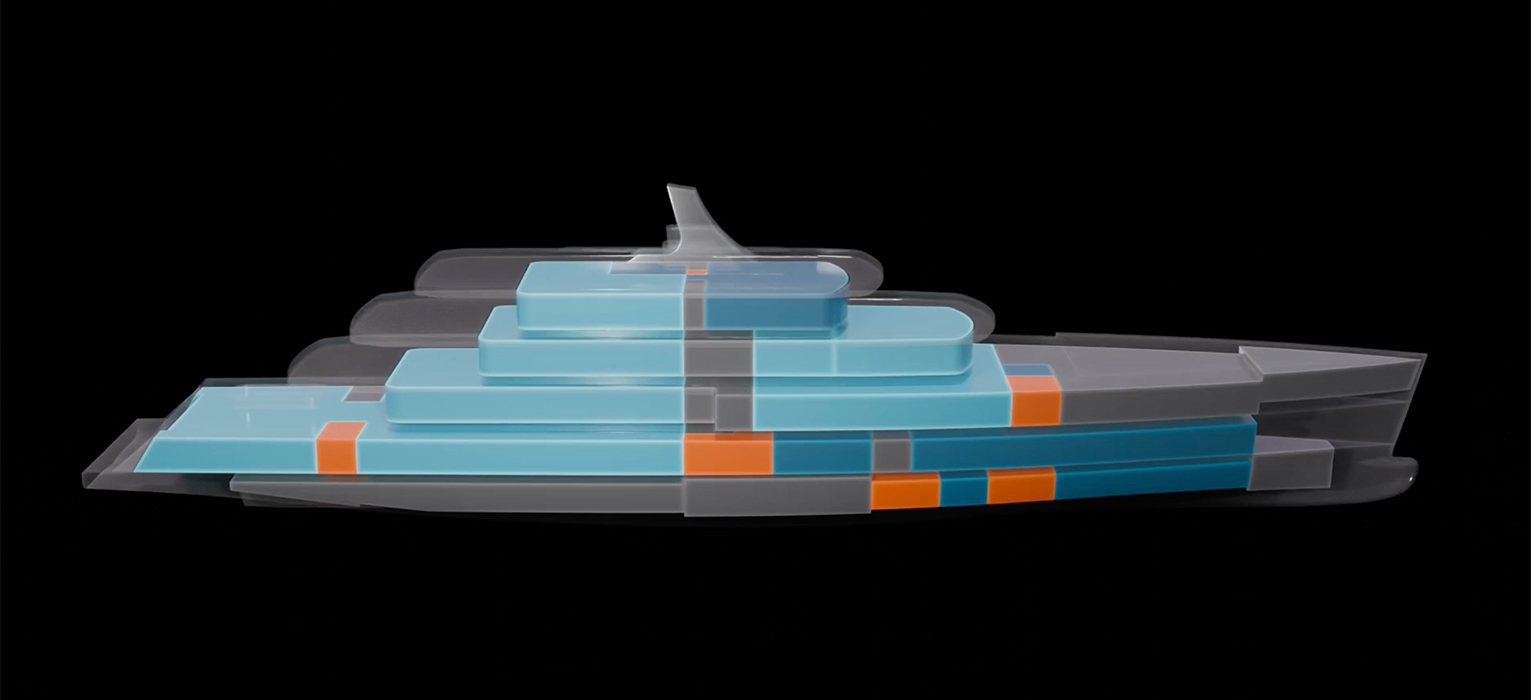
The DRAKE general arrangement logic is rooted in operational lessons. Y.CO‘s brokerage and management teams bring decades of lived experience into how crews work through a yacht, how clients actually use space and what patterns of failure or frustration emerge once a vessel is in service. This operational feedback has been deliberately embedded in the backbone before any specific Owner is involved.
The project draws heavily on the performance of recent yachts known for strong crew retention and satisfaction, including vessels where crews have remained remarkably stable years after delivery. The Obsidian reference in the meetings is telling: crew retention and satisfaction on a technically well-resolved yacht remain high long after delivery—considered one of the clearest proxies for a “good” boat.
Crew Area and Distribution
Crew areas are brought together and moved forward both on the lower deck and the tank deck, rather than being scattered in leftover spaces. The tank deck offers around 130% of the crew area found on a typical reference vessel of similar size, allowing for properly sized laundry rooms, crew gyms and social spaces as well as storage.
Main and secondary staircases are treated as coherent vertical systems rather than as elements patched into gaps late in the design. The combination of these decisions may not be visible in a brochure, but they shape daily experience: less friction, fewer compromises for crew in daily routines, better maintenance and survey access, and ultimately a more stable, loyal crew.
Galley, Provisioning and Waste Flows
Galleys and cold stores are located to support coherent flows of food, provisions and waste without intersecting guest routes. Waste stores sit by crew entrances rather than near guest circulation. Cold stores lie adjacent to galleys. These arrangements seem mundane, but they manifest in the feel of the yacht over time: service that appears effortless.
The backbone ensures decisions are focused on efficiency, that they are effective for crew and that the project is technically future-proofed. For Owners this is not a visible selling point but it contributes to a ship that wears long-distance cruising lightly.
Tender Philosophy
The tender philosophy reflects Y.CO‘s operational feedback. The baseline arrangement places the main tender garage forward on the main deck. This garage is dimensioned to house a 12 metre, a 10 metre and a 6 metre tender in the reference configuration. By shifting tender operations away from the stern, the design keeps the aft ship as a primarily guest-focused environment.
A key theme is multi-purpose use of assets. For example, a 10 metre tender certified to SOLAS rescue standards can serve both as a comfortable guest craft and as a primary rescue boat. This can eliminate the need for a separate dedicated rescue tender, freeing space in the garage or on deck for other uses, whether additional toys, storage or auxiliary craft.
Tender Garage Flexibility
The backbone does not lock in specific brands or models, but it does fix the critical boundary conditions: envelope dimensions, clear heights, crane capacities and doors. This ensures that future developments in tender design—such as foiling chase boats, hybrid craft or specialist dive platforms—could be accommodated without structural surgery.
The tender story is less about a specific brand and more about giving the backbone correct box dimensions and deck heights for a future-proof tender suite with potential to adapt between owner profiles (fishing, diving, helicopter integration, etc.) without re-architecting the structure.